
There’s a certain thrill that comes when you step into a theatre. Not the casual excitement of turning on a show at home but a rising hum in your chest. The lights dim, the air shifts and suddenly you’re no longer yourself; you’re part of a collective pulse. That feeling stands boldly in the face of every digital entertainment convenience available today. Even with millions diving into streaming services comparison videos or binge watching new seasons, there’s something in the live theatre experience that keeps audiences returning to the stage generation after generation.
This isn’t a nostalgia trip. It’s an honest look into how theatre vs streaming continues to be a conversation where the stage wins more than people expect. And if you’ve spent years observing performing arts the way I have, you begin to understand how extraordinary this living art form truly is.
The Irreplaceable Pulse of Live Performance in a Digital Age
Streaming platforms have become the default comfort zone for modern entertainment. Netflix alternatives rise and fall, new apps launch every quarter and people casually devour episodes like snacks. And yet, despite all this convenience, the live performance benefits are undeniable. There’s a wild, untamed energy that only exists when performers and audiences breathe the same air.
When you’re sitting inside the theatre, the performers are responding to the room. The rhythm, timing and emotional undercurrent shift based on audience reactions. That’s something digital theatre, as ambitious as it can be, still cannot replicate. It’s not simply watching a story; it’s participating in one.
A few reasons why people return to theatre even with endless streaming choices include:
- the thrill of unpredictability that comes with live entertainment
- the intimate feeling of sharing a moment with complete strangers
- the sensory richness of staging, lighting and raw human expression
There’s no buffering, no pausing, none of the casual multitasking that kills immersion. It’s immediate, vulnerable and fiercely present. That’s why performing arts have survived every technological shift for centuries.
It also explains why Broadway live ticket demand skyrockets whenever a groundbreaking musical appears on the scene. Audiences crave realness. They crave the electricity of presence. As someone deeply immersed in theatre culture, I can tell you that live shows thrive because people long for experiences that feel personal, not algorithmically generated.
Theatre production itself transforms energy into art. When artists rehearse day after day, they sculpt moments meant to hit the audience right where it matters. No streaming platform can simulate the crackling charge of an actor stepping forward, lowering their voice to a whisper that somehow reaches every seat in the room.
How Theatre Connects More Deeply Through Engagement, Community and Human Mystery
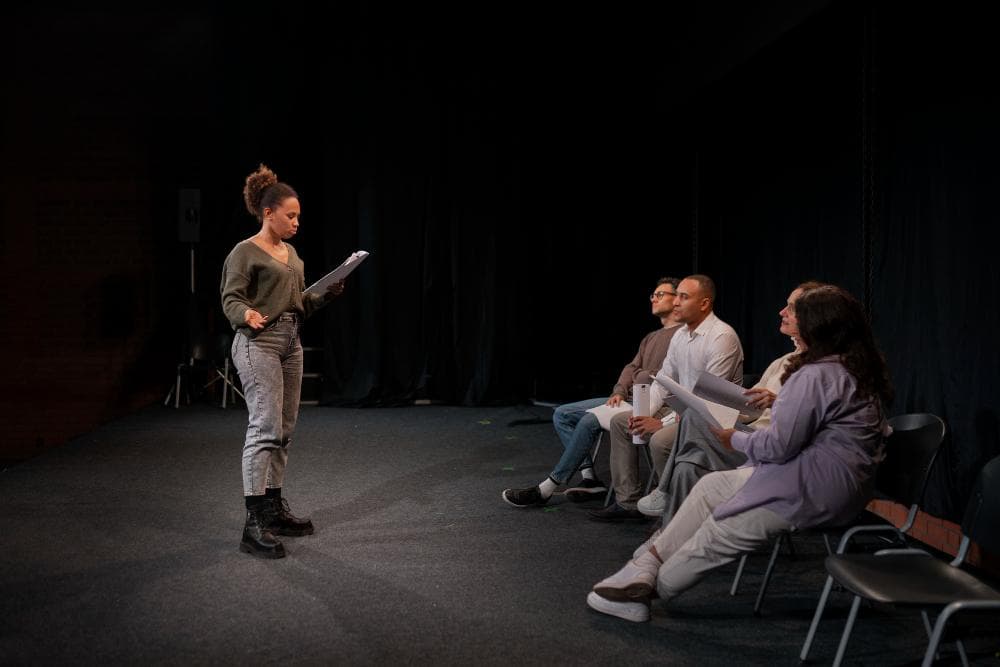
One of the biggest advantages theatre holds over digital platforms lies in theatre audience engagement. When you watch a screen, you’re only a consumer. But in a theatre, you become a participant. Your laughter shapes the pacing, your silence heightens the tension and your applause becomes part of the performance itself.
This mutual exchange is what makes theatre events feel ceremonial. You’re not only observing the story; you’re woven into it. That’s why people who describe their performing arts experience often mention goosebumps, emotional release or the sense of being transported somewhere else entirely.
Streaming platforms follow global trends and analytics. Theatre shows follow heartbeat and instinct. That alone sets them apart.
Even in modern theatre landscapes, where technology blends with stagecraft, the core appeal remains the same. People return for connection. They want to be seen, to experience stories that echo through the room. And the theatre community is unusually tight knit because of that. People line up not just for a show but for a ritual that awakens something ancient and deeply human.
Consider how immersive theatre has evolved. It’s no longer about sitting in a seat. Some productions invite you into entire worlds where you can walk, explore and interact with performers. Compare that to passive entertainment where the only interaction is pressing the next episode button. The difference is monumental.
A second list that reflects the emotional power of live theatre might look like:
- sense of community built through shared experience
- heightened emotional impact from real voices and real bodies
- unpredictability that makes each night unique
- the human mystery of watching someone transform right before your eyes
These emotional layers are the reason theatre attendance remains strong even as digital subscriptions skyrocket. People want the kind of magic screens simply cannot deliver.
And let’s not forget theatre industry trends that show younger generations returning to live theatre more than expected. After years of digital saturation, people crave authenticity. They crave texture. They crave the feeling of stepping away from the digital noise into a world that exists only for a few fleeting hours.
This is why live show experience will always carry more emotional weight than binge watching. There is no substitute for the silence before an actor delivers their first line or for the collective gasp when something unexpected happens on stage.
Why Theatre Outshines Streaming in Craft, Culture and Long Term Impact
Streaming platforms excel at convenience. They deliver entertainment in seconds. But convenience is not the same as impact. The long term influence of theatre culture reaches far beyond the walls of a single venue. Its effect lingers in memory, shaping how people think about art, relationships and life itself.
Think about the creative discipline behind theatre production. Actors rehearse for months, technicians work tirelessly on lighting cues, costume designers create wearable narratives and directors sculpt emotional architecture with precision. You can feel this craftsmanship when you watch the final performance. Every element is intentional, thoughtful and alive.
Streaming lacks that physical immediacy. Even the most beautifully shot series remains a fixed recording. It does not evolve with the audience. Theatre does. The performers bring fresh energy every night, responding to the shift of the room. If you attend the same show twice, you’ll never get the same performing arts experience twice. That uniqueness is priceless.
Streaming services comparison videos often show how these platforms compete on variety, price and production value. But theatre competes on soul. And soul wins more often than people think.
Modern theatre also continues to innovate. Digital theatre experiments with projections, soundscapes and virtual elements. Some productions incorporate augmented reality or interactive stages. This blending of tradition and innovation keeps theatre relevant while maintaining its character.
Meanwhile, theatre events bring communities together in a way online platforms cannot. Festivals, local productions, experimental shows and grand Broadway live performances all contribute to the cultural heartbeat of cities. People attend theatre not just for entertainment but for intellectual stimulation, emotional release and social bonding.
Theatre shows imprint memory in a way no autoplaying episode can. The lights rising for intermission, the sight of actors taking their bows, the hum of conversation as people leave the venue, each moment becomes part of a personal timeline.
The vividness of live entertainment lingers. That’s what keeps theatre vs streaming from ever being a fair fight. The stage simply hits deeper. It reaches into the human psyche with a force that screens cannot emulate.
If you spend enough time around performing arts communities, you hear the same sentiment over and over. People don’t remember what they streamed last Tuesday. But they remember the show that made them cry six years ago. They remember the actor who held the stage with nothing but presence. They remember the set that felt like stepping inside a dream.




Recent Comments